Flashpoint: Wild Space, six days in
Six days into rebuilding Flashpoint, my 2D space strategy game, as a 3D browser MMO. Two players can fight pirates and each other in one star system, all 90 of my ships and buildings are modeled in 3D, and three warp drives are finished and waiting for the galaxy.
Three days ago, Flashpoint: Wild Space got two pictures at the end of the MechAssault v2 post.
Flashpoint is a 2D space strategy game I made in Godot. Wild Space rebuilds it in 3D as an MMO played in the browser, with a server that runs the galaxy.
As with MechAssault v2, AI agents write the code and make the art. One agent writes each change, another reviews it, and it merges only after the automated checks pass.
The first code went in on November 9. Five days later, two players can fly in the same star system and fight pirates and each other over the network, and a load test holds 50 scripted players and 150 NPC ships in one system.
In the game today
- One star system with a star, a planet and a pirate base, plus a black hole and a wormhole that are scenery for now.
- Every faction's warships, fighters to titans.
- Combat with three kinds of weapon: beams, projectiles and homing missiles. Shields take hits first, then the hull, and destroyed ships break apart.
- Pirates that patrol, attack ships that come within range or fire on them, and are replaced 30 seconds after they die.
- Personal loot. Everyone who does at least a tenth of the damage to a kill gets their own container, which no one else can see.
- Sound effects from the original game.
Apart from the two fight clips above, every picture and clip in this post was recorded outside the game, on pages that show one model or effect at a time.
The ships
I drew every ship and building in the original game as a 2D sprite: 54 ships, 6 named bounty hunters and 30 buildings. AI agents modeled each one in Blender from its sprite, and a review pass sent the weak ones back for another try, for 515 versions across the 90 models.
The bigger classes are now drawn 1.5 to 3 times their size in the original, so the largest titan is about 1,200 units long against a fighter's 40.
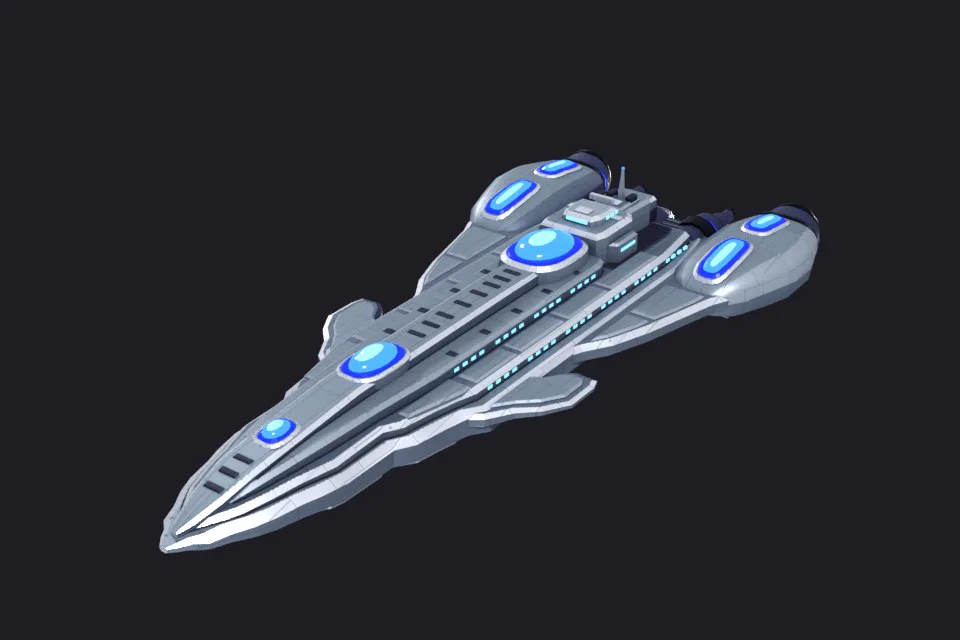
Federation titan
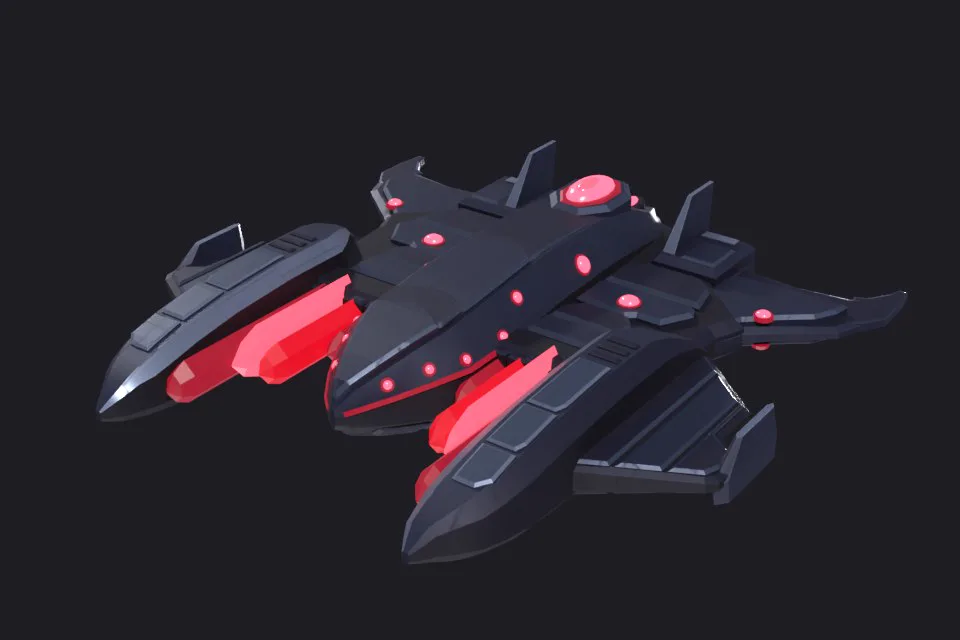
Empire titan
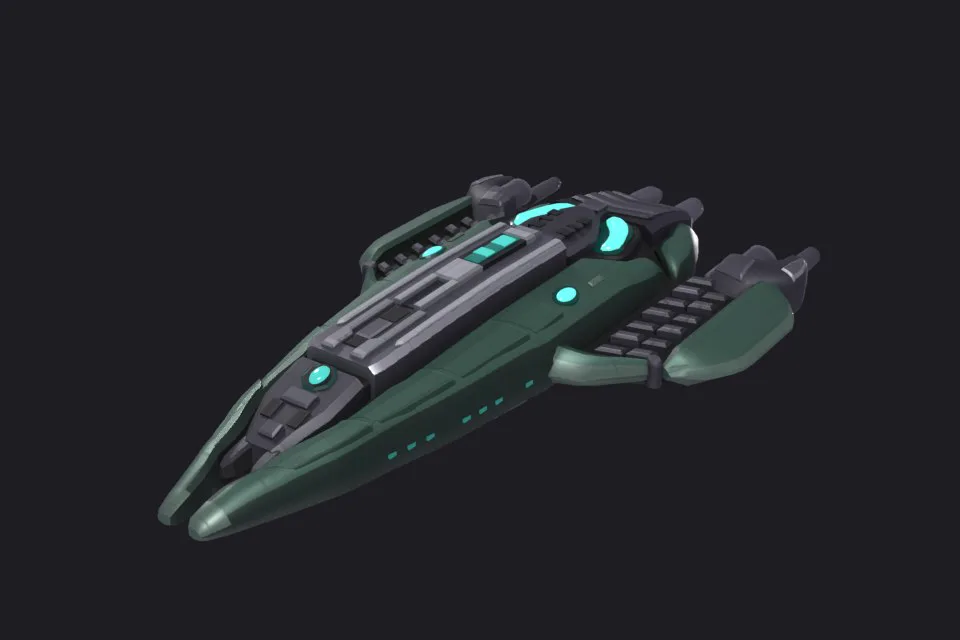
Collective titan
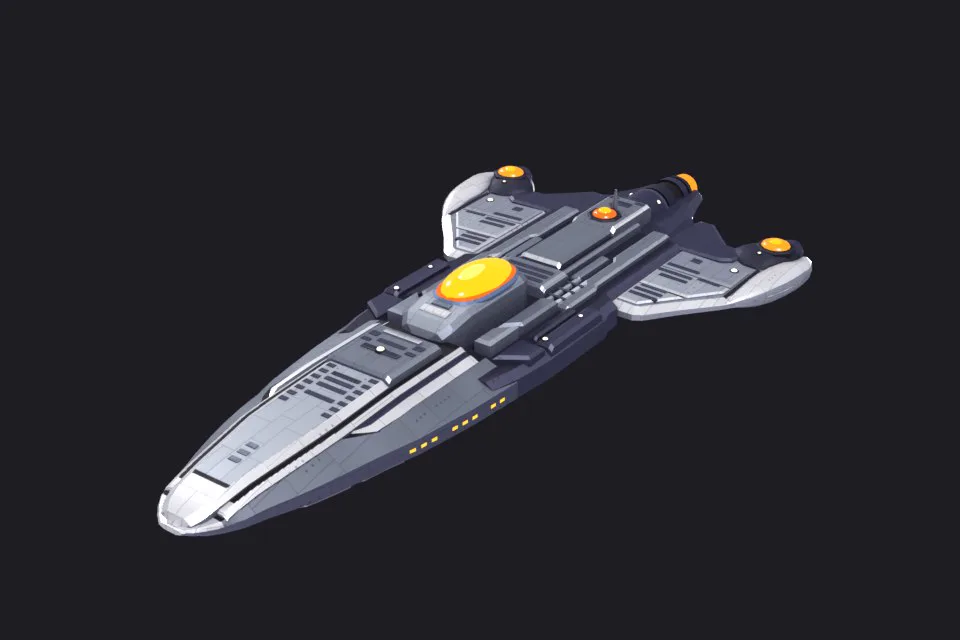
Syndicate titan
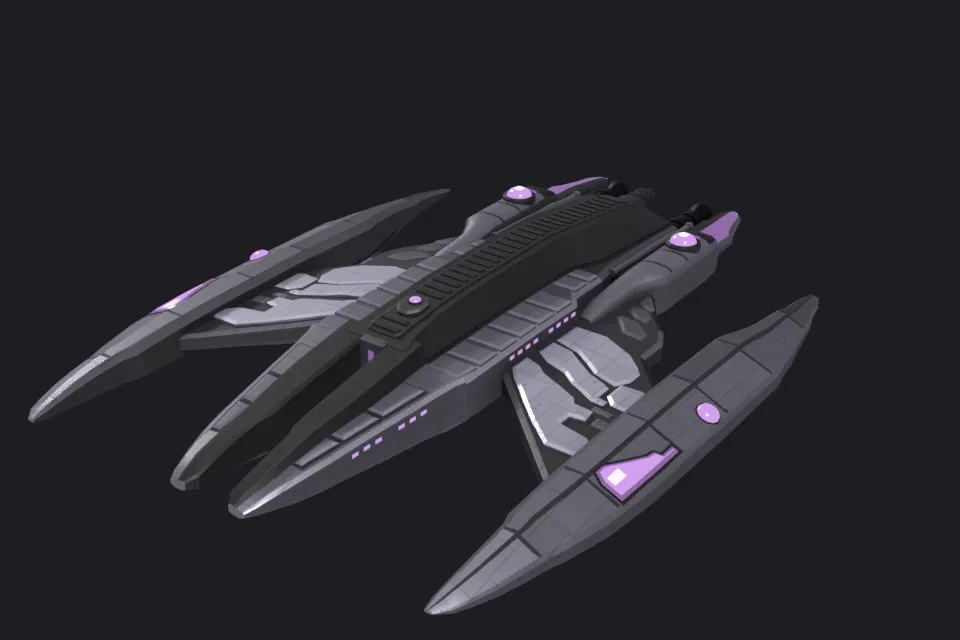
Frontier titan
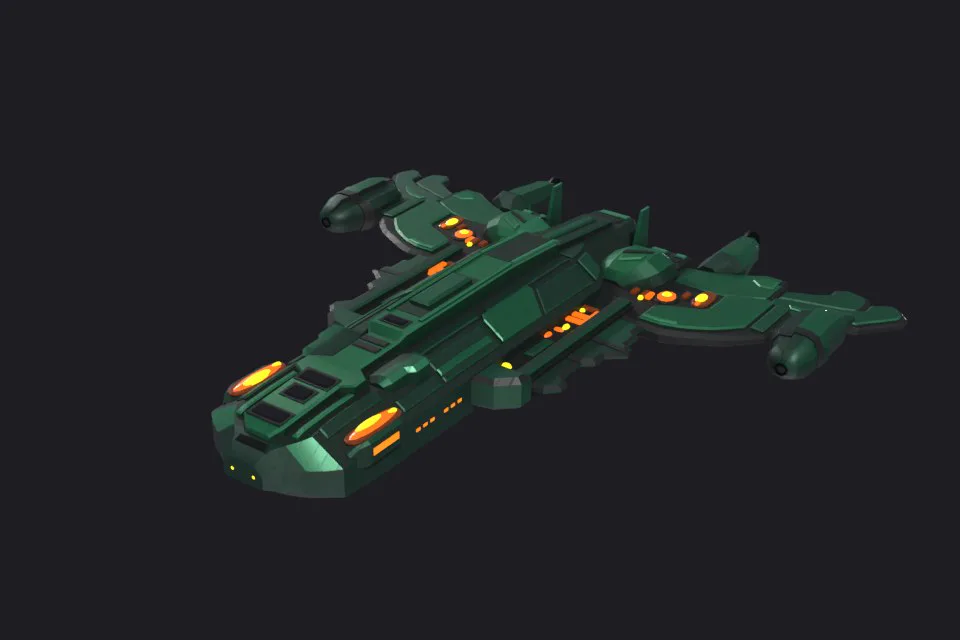
Pirate titan
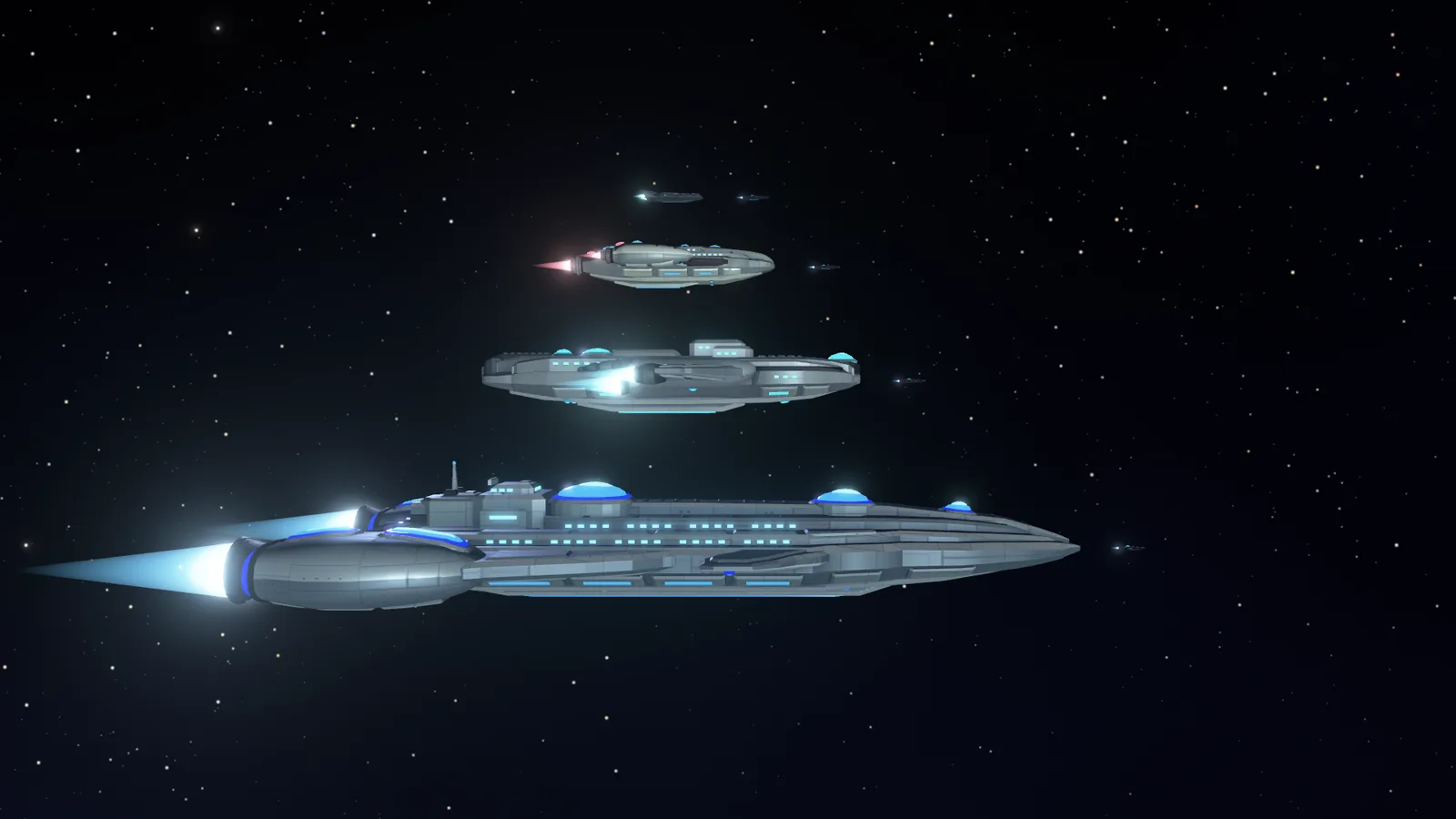
The star systems
Stars, planets, black holes and wormholes are drawn live by the graphics card rather than modeled. Each star system's ID picks which of the eight kinds of planet it gets.
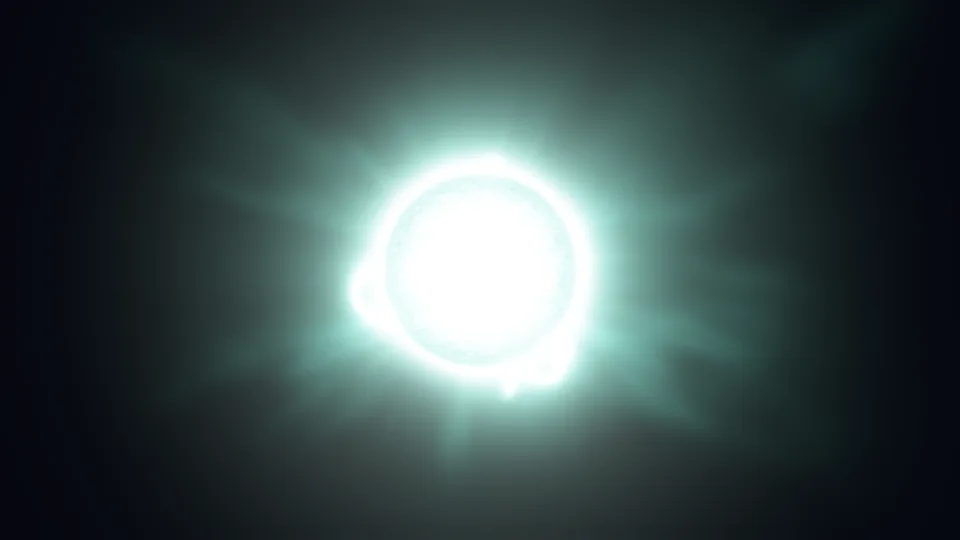
Star
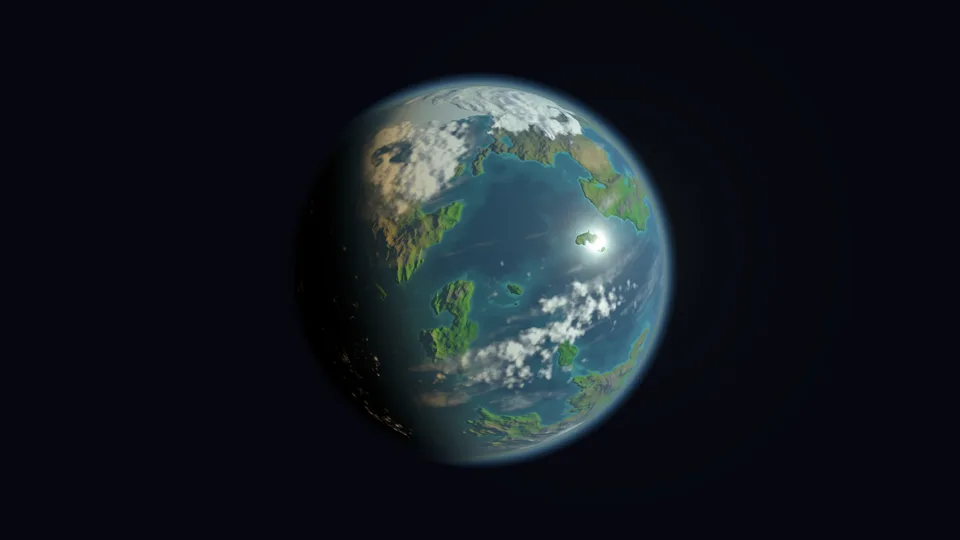
Terran
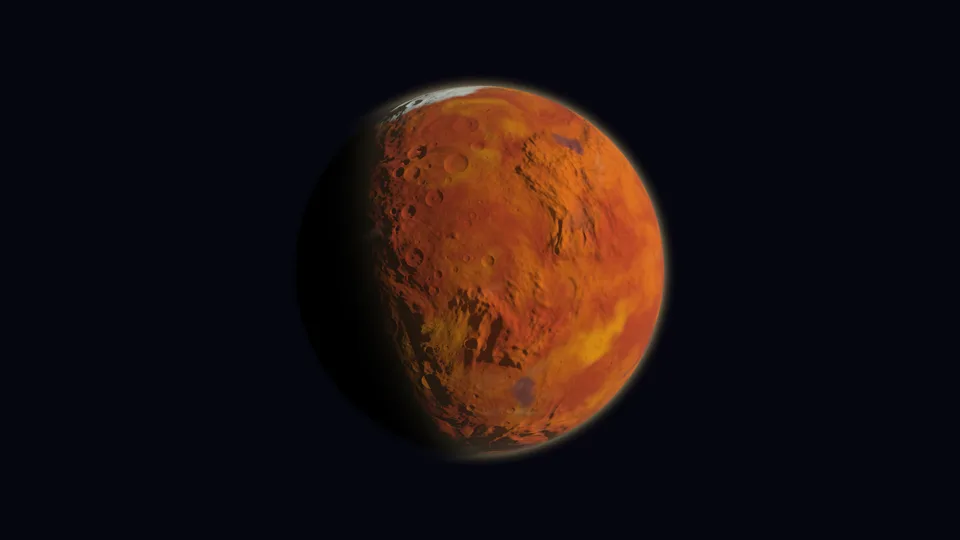
Desert
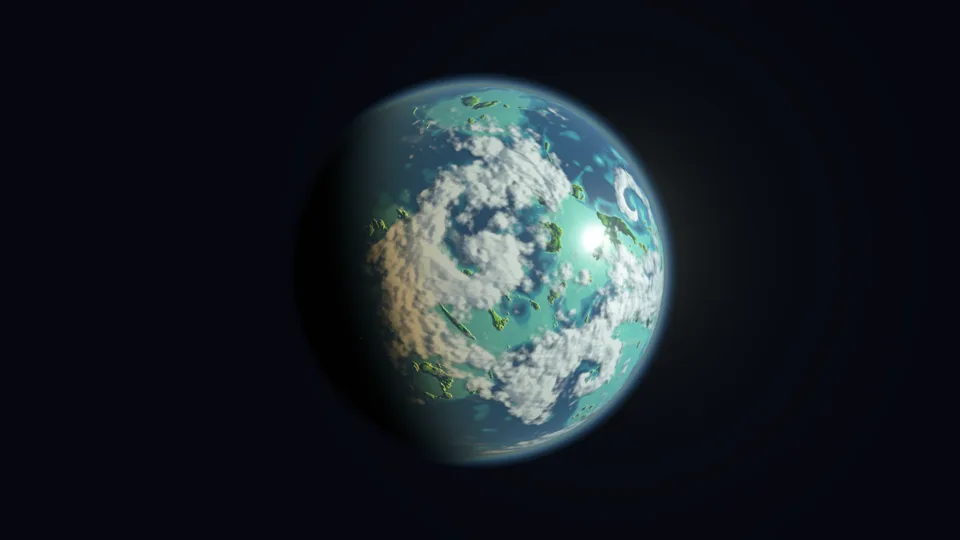
Islands
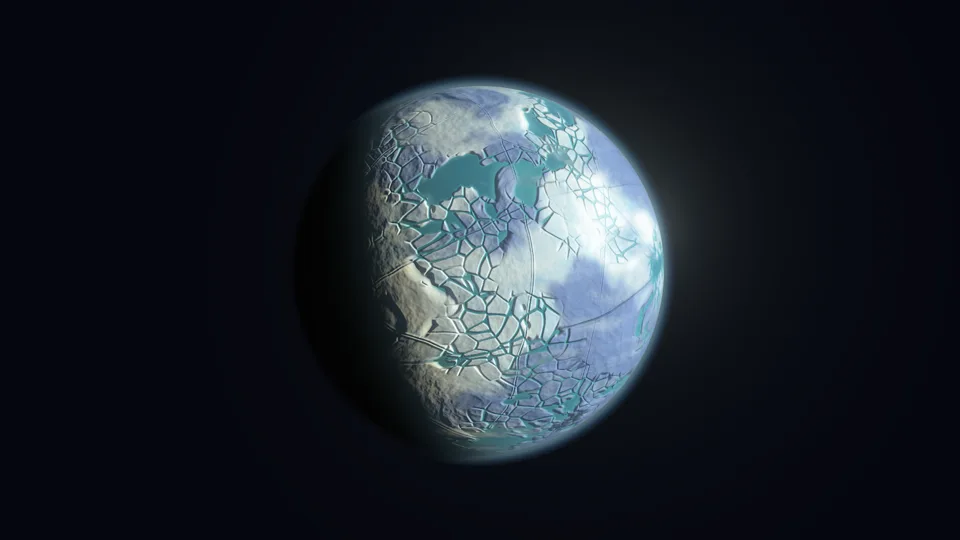
Ice
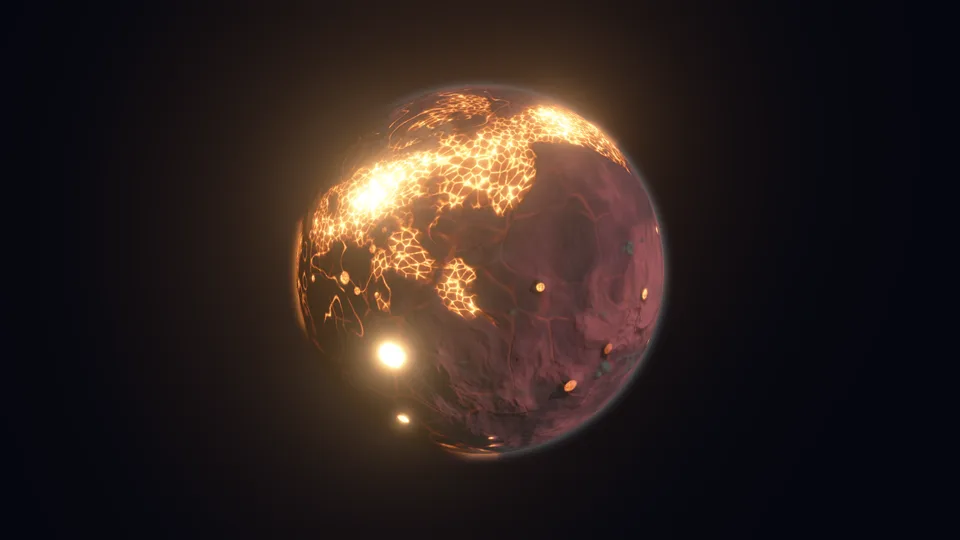
Lava
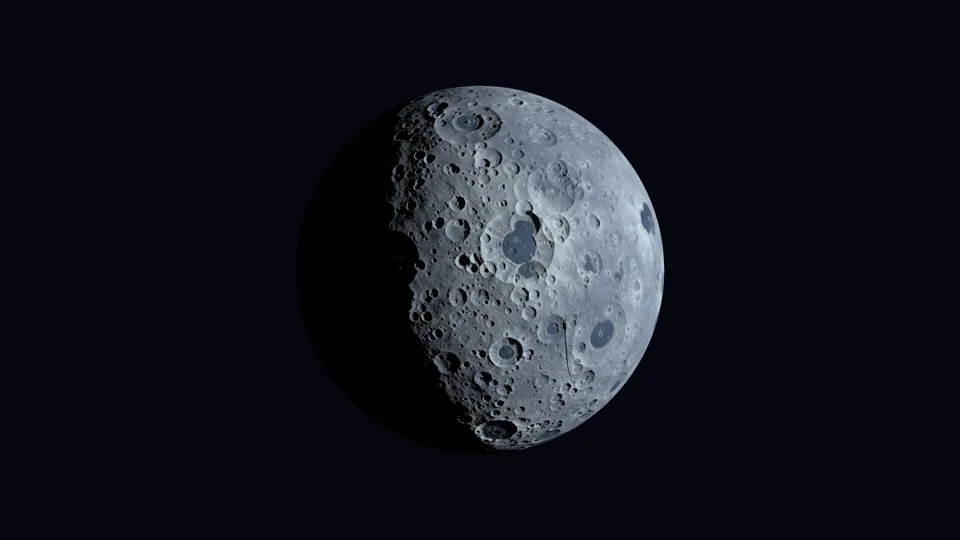
Barren
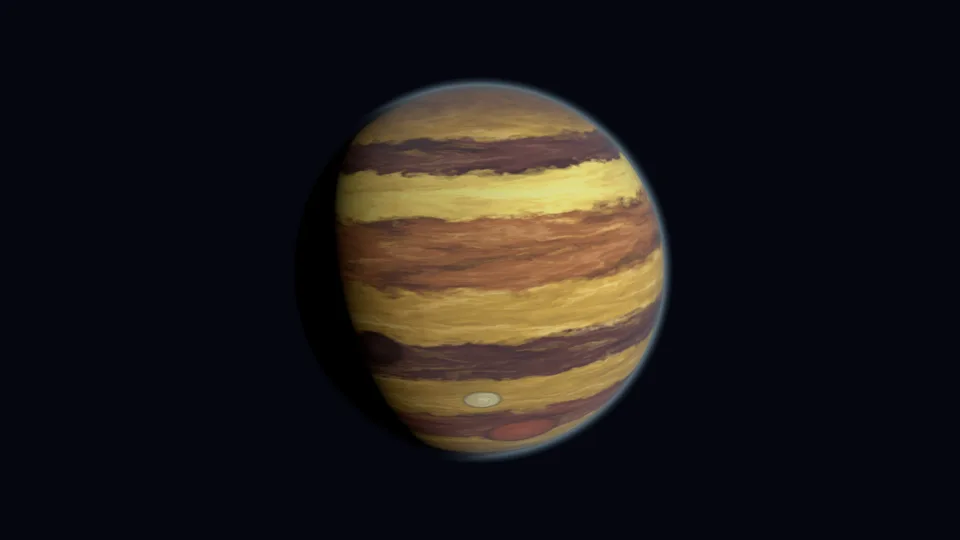
Gas giant
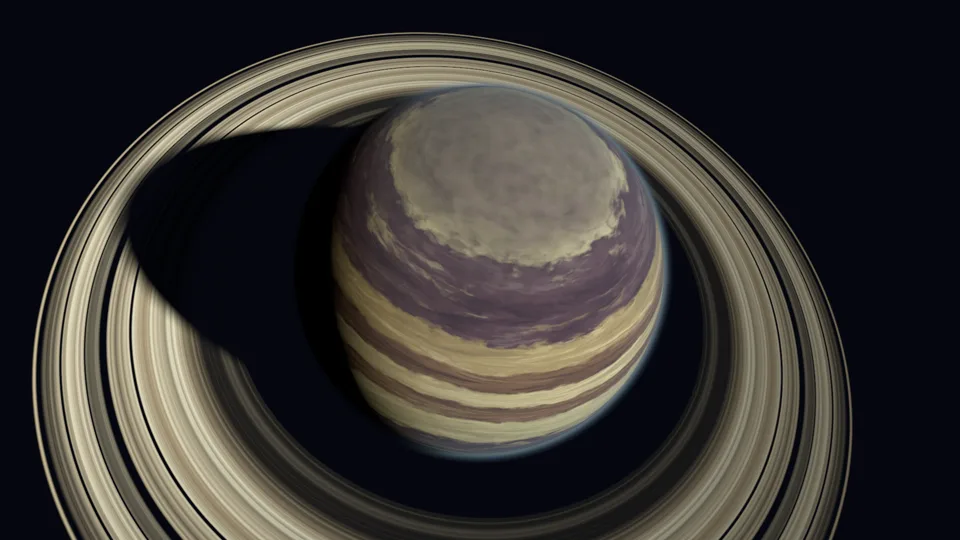
Ringed
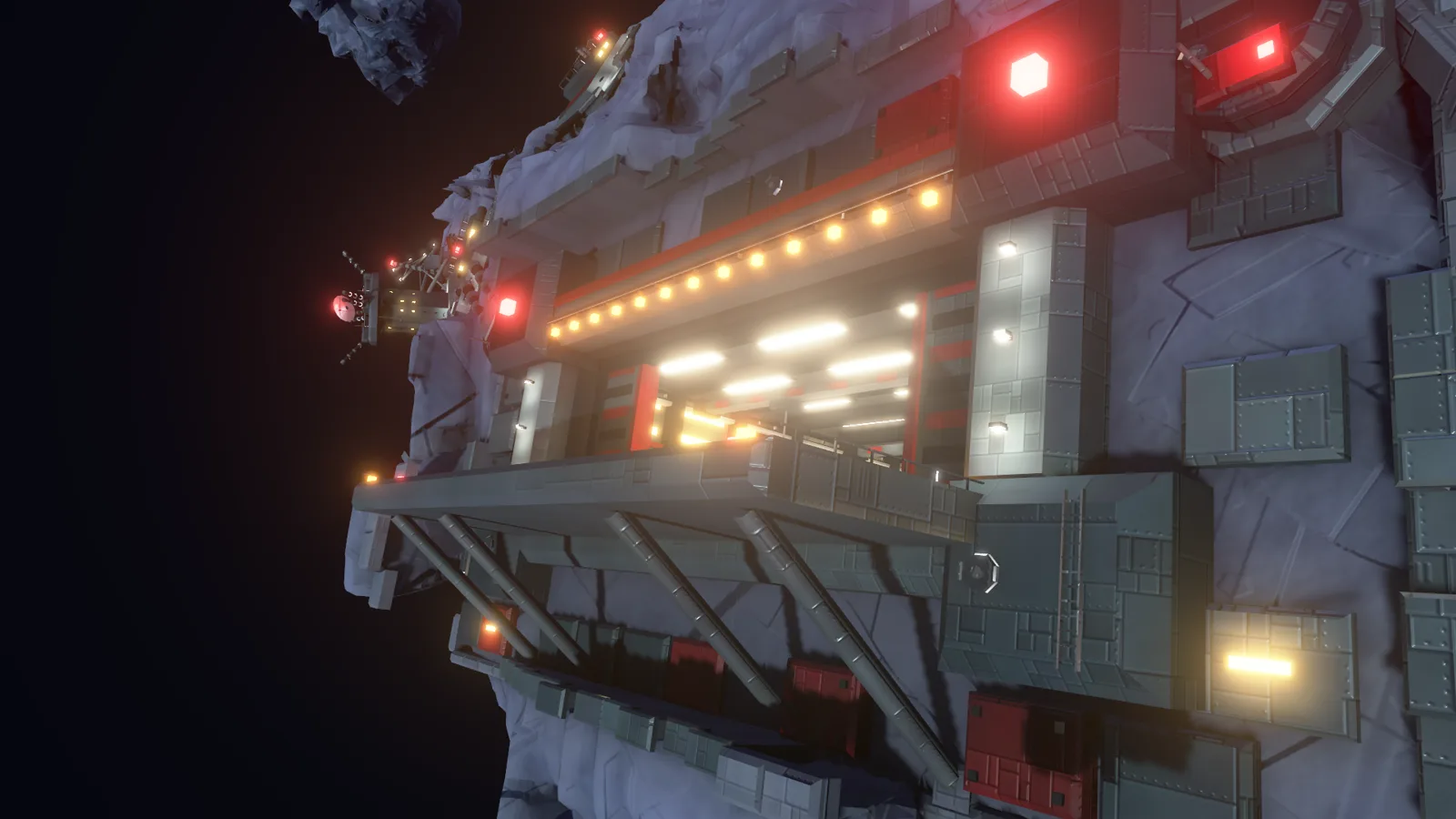
The pirate base is a fortified station built into a large asteroid, in the pirate ships' colors.
The effects
Weapons fire from their own mounts on each ship's model, and engines show thrust, boost and braking.
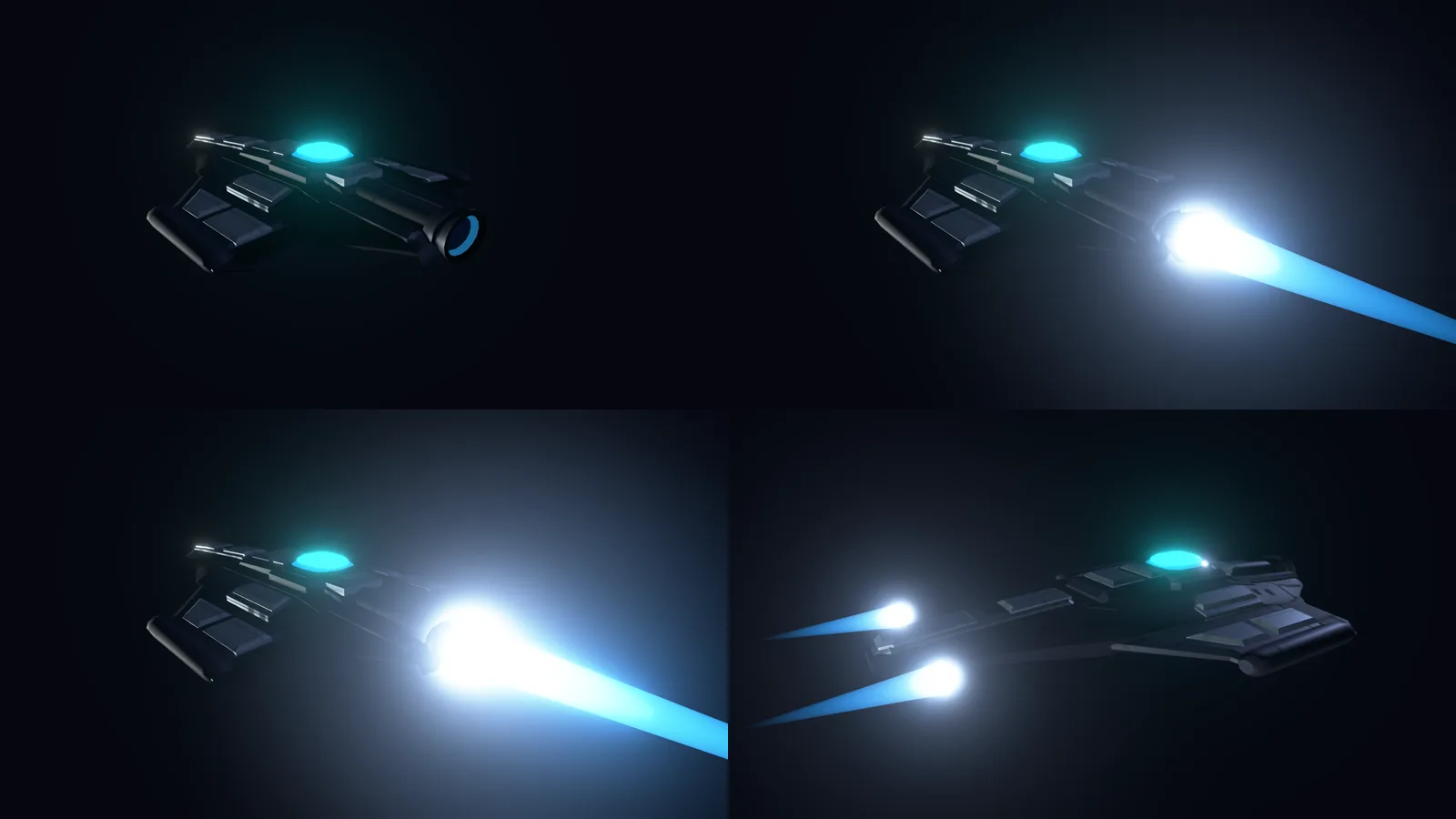
Explosions use each ship's size from the original game, scaled up with the ship for the bigger classes, so a titan's is three times the original's.
On the shelf
The shelf holds art that's finished, or being made, before the game has a use for it. Each piece waits for the part of the game that needs it. The warp drives need travel between star systems, and the city lights need planets that can change hands. AI agents build each piece, and I approve it or send it back for another round.
Warp drives
I had three looks made for faster-than-light travel and kept all three, as three tiers of warp drive:
- The shove, every ship's standard drive. Energy builds along the hull, and the ship launches out of a flash and a shock ring.
- The corridor, the second tier, an upgrade any ship can fit. A ring forms ahead of the ship and opens into a tunnel that the ship flies through.
- The fold, the third and highest tier. Space bends around the ship, the ship stretches out and vanishes, and in transit the stars streak into arcs.
The higher the tier, the less other players see. The shove's flash can be spotted from 1,500 units against any sky, while the fold barely shows against black space. Each look has a stronger version for jumps between stars.
The Void Drive, a rare upgrade that jumps a ship straight to any destination in the galaxy, even mid-fight, is getting three looks of its own.
Visible damage
Right now, a ship looks undamaged until it explodes. The new effect adds damage that builds as the hull wears down: scorch marks, fire, smoke, and lights and engines failing.
Nebulae
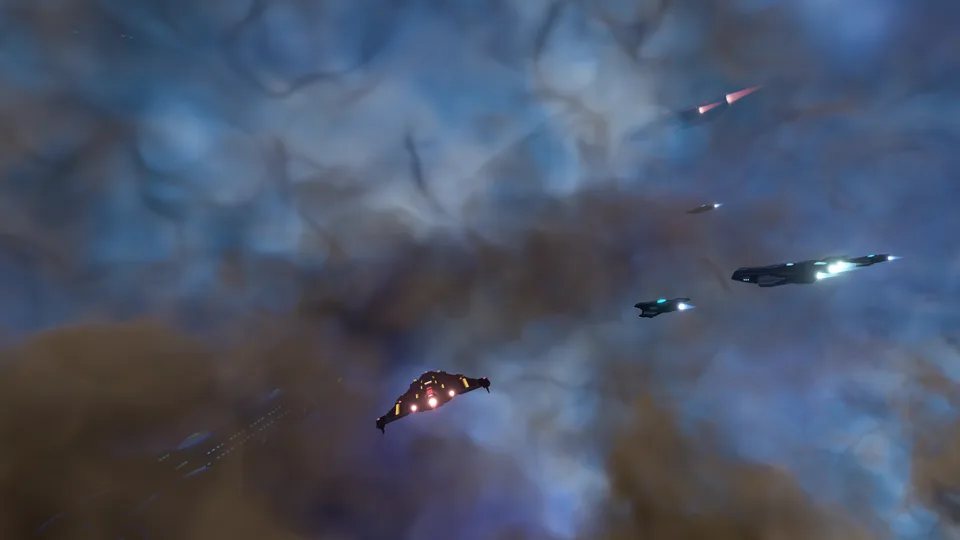
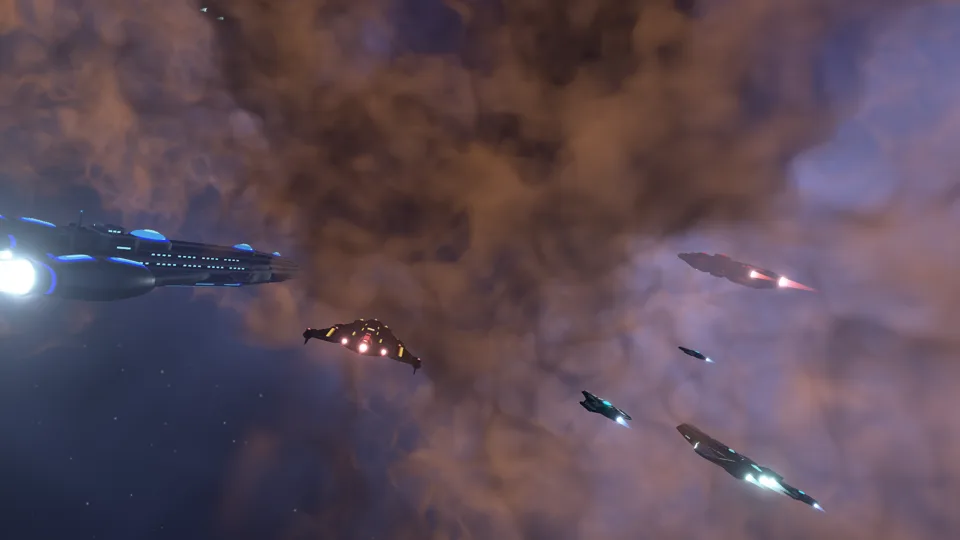
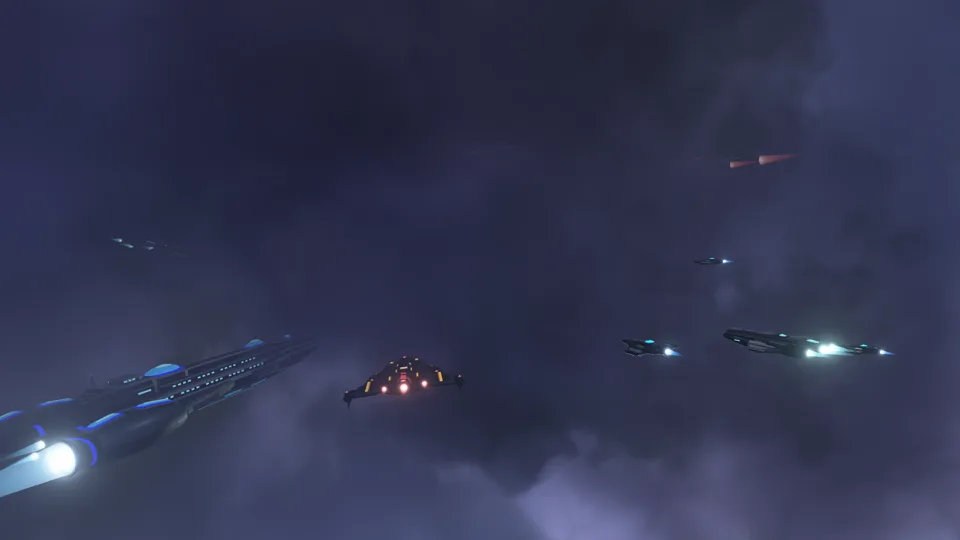
In the game today, nebulae are painted into the background. These new ones are clouds a ship can fly into. Inside, other ships fade into the gas, the star dims and takes the cloud's color, and storm nebulae flash with lightning.
Emission
Dust
Storm
Comets, moons and city lights
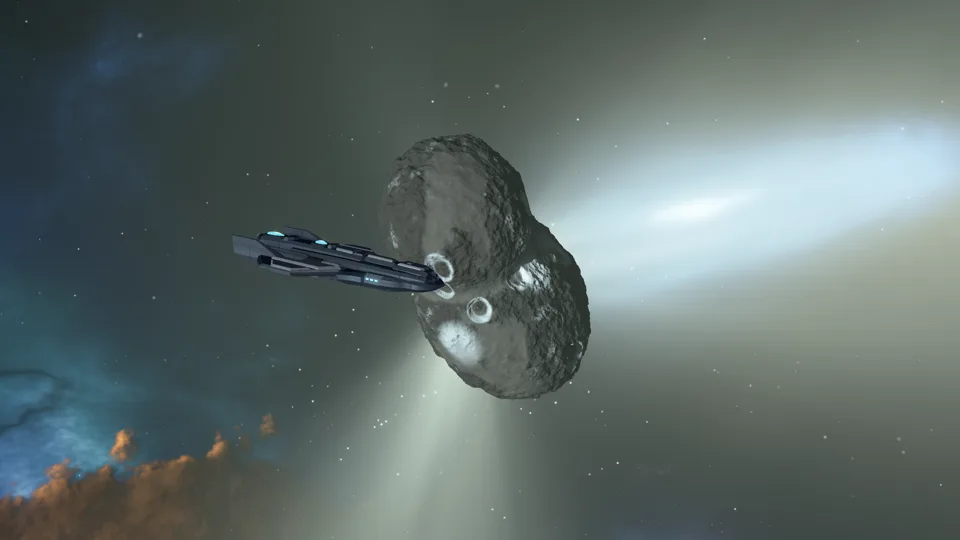
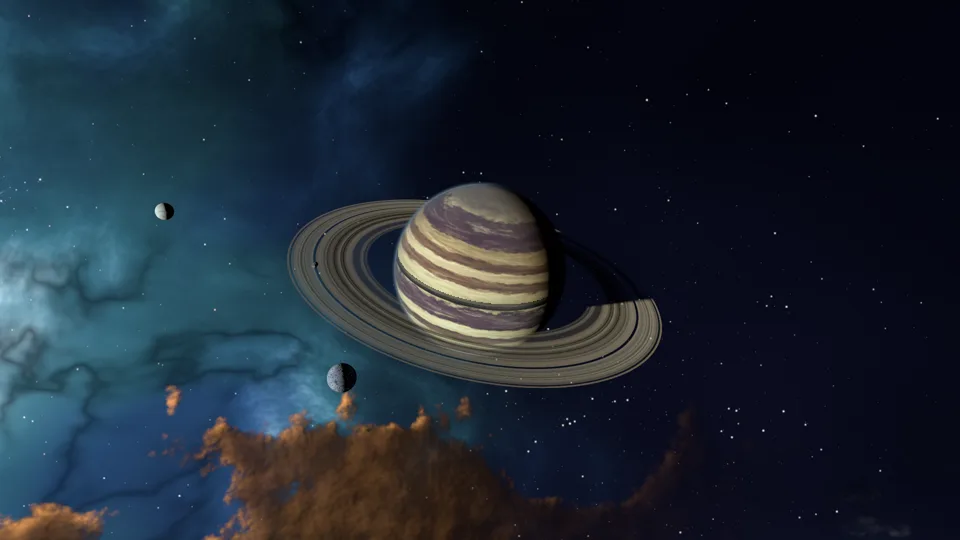
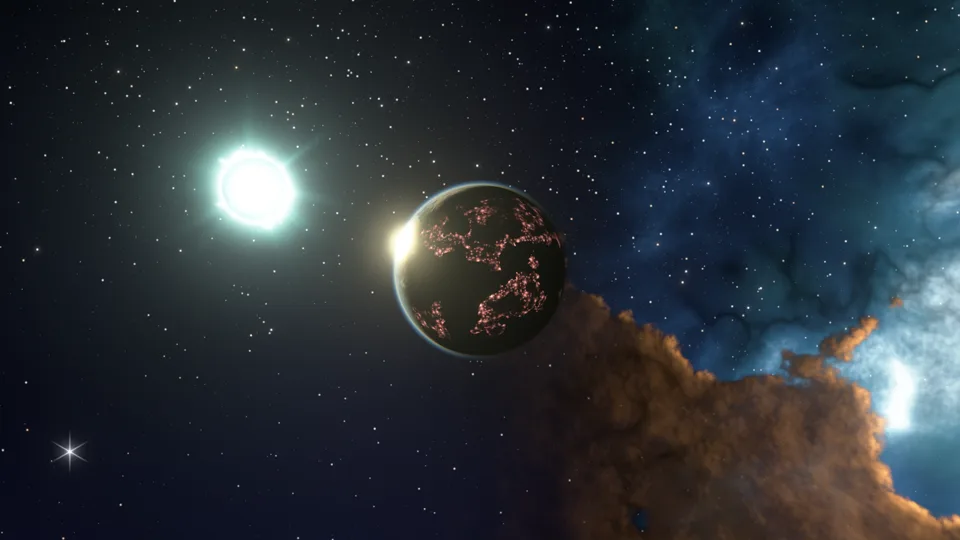
Planets get one to three moons, which cast shadows on them. Comets grow their tails as they get closer to the star. An owned planet shows city lights on its night side in the owner's colors. When the planet changes hands, the lights go dark district by district and come back in the new owner's colors.
Comet
Moons
Night lights
Ancient structures
The galaxy will also hold structures left by an extinct civilization. The first is a wrecked warship as long as about five of the largest titans, broken in two when its own magazine exploded. Ships will be able to fly through it.
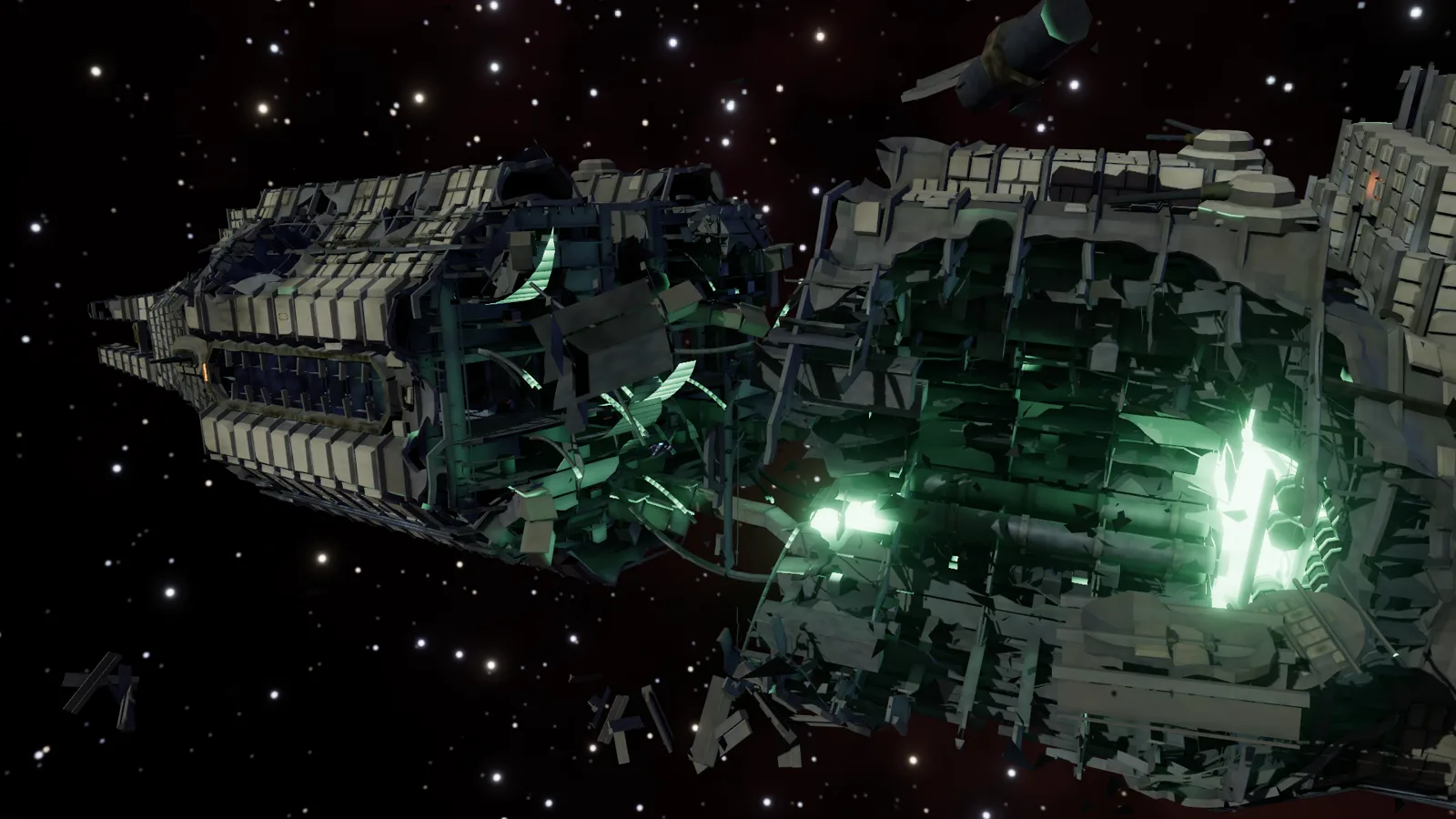
The second is a gate. A ship that flies into its center comes out somewhere else.
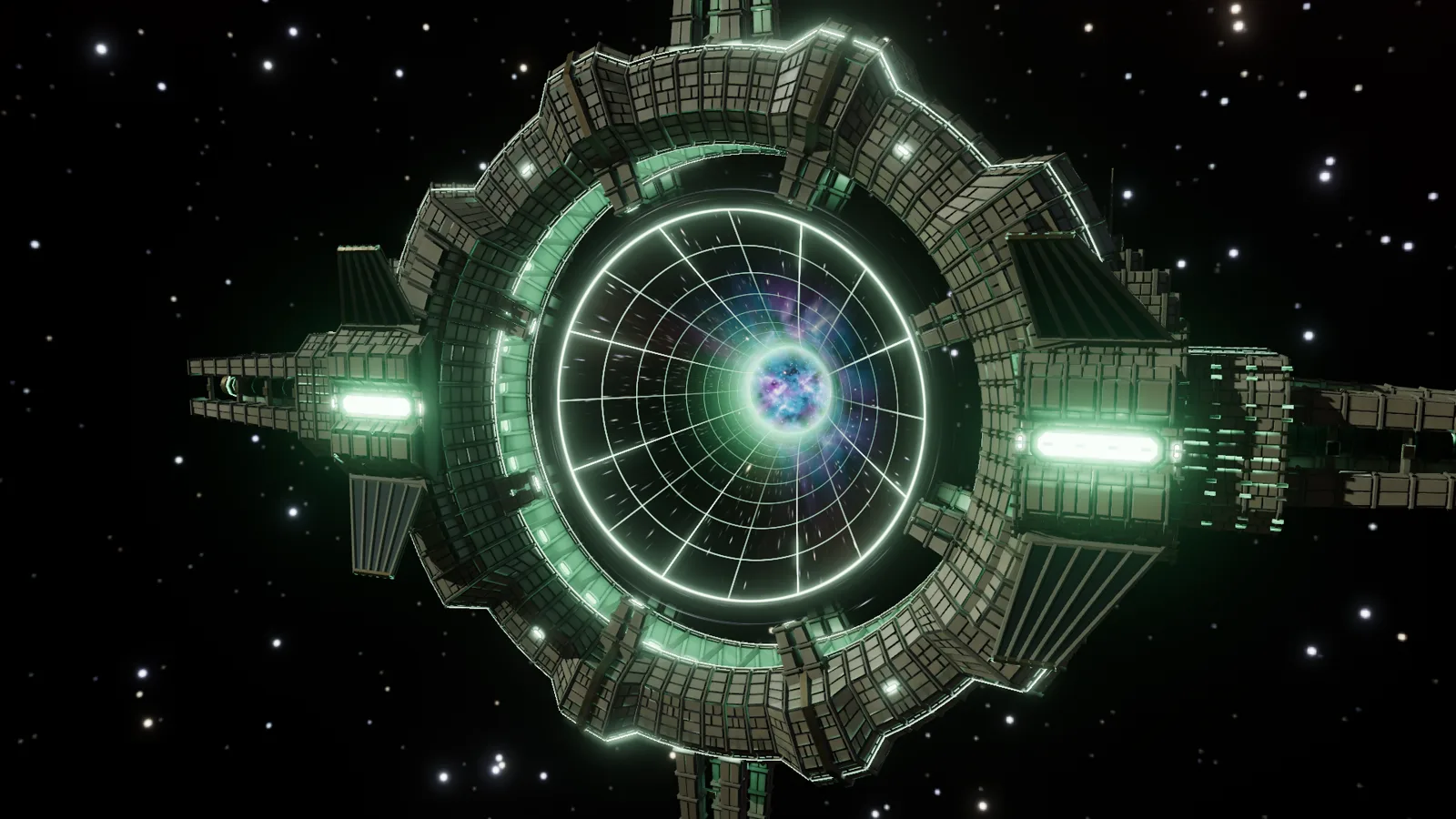
What's next
Next is a galaxy of 200 star systems, travel between them, and accounts that save your progress. The warp drives, nebulae, comets and moons come off the shelf with it, along with 38 asteroid models for asteroid belts and mining: six shapes for each of six ores plus two large rocks, from iron's metal nodules to delithium's crystals.
There's no public build yet.