MechAssault v2: rebuilding Lone Wolf from the disc up
The second attempt, in active development: a browser remake of MechAssault 2: Lone Wolf, built by agents that work from a durable ledger and the original game's own data instead of guesses.
MechAssault v1 taught me that an orchestrator agent left to hold the vision on its own will slowly lose it, and that an agent with nothing to reference will invent things. v2 is the attempt to fix both.
The target this time isn't a game inspired by MechAssault. It's a single-player browser remake of MechAssault 2: Lone Wolf, built from the original game's disc. It's still in active development, so this post covers where it stands today.
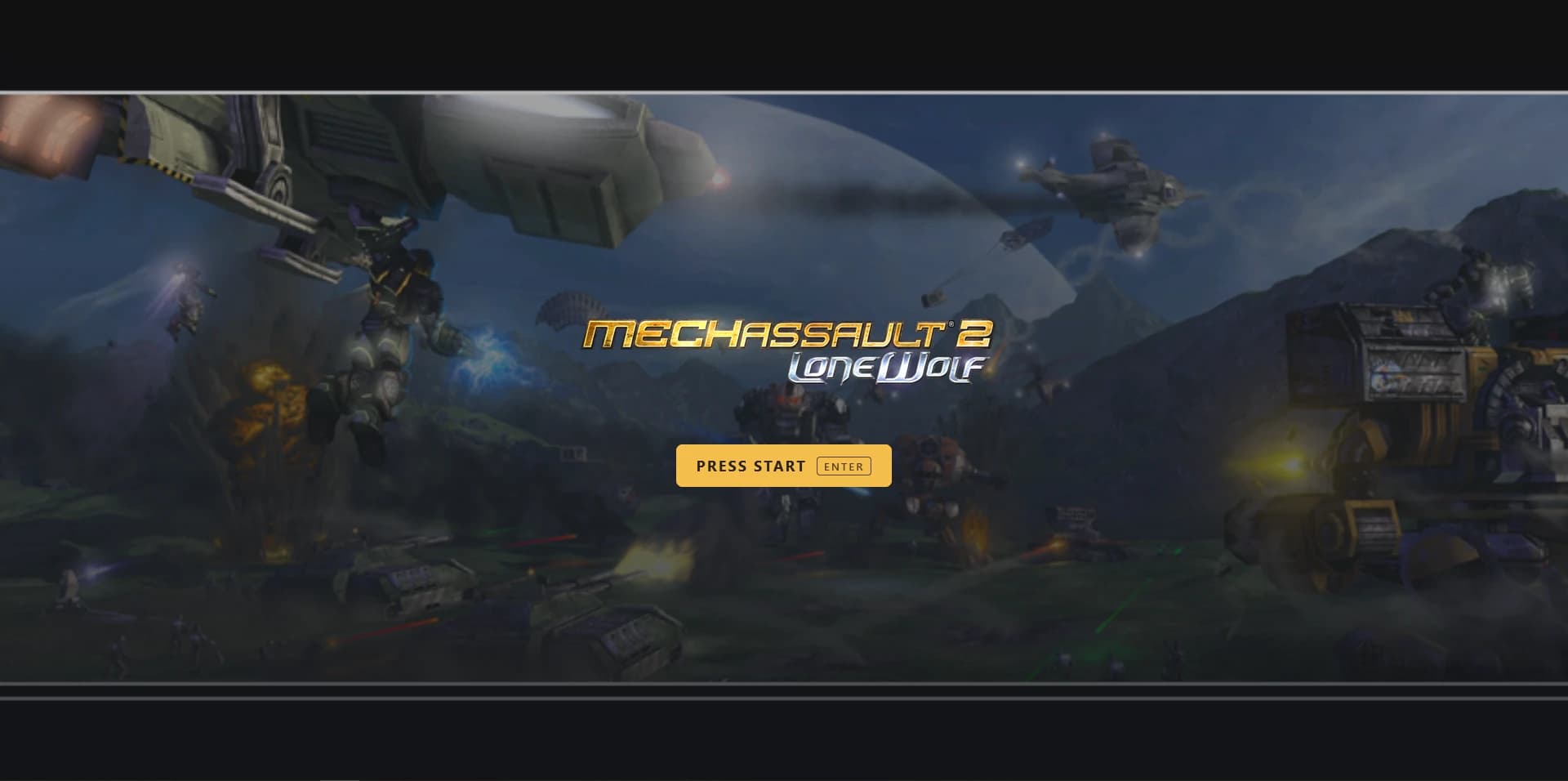
What changed from v1
v1 failed in three ways: the vision decayed, there was nothing to reference, and the code was vibe-coded. Each one got a direct answer.
A durable ledger instead of a memory
In v1 the vision lived only in the orchestrator's context, and context compaction wore it down. In v2 the vision and every decision behind it live in a durable ledger outside any single agent's memory. When an orchestrator session ends, crashes, or gets compacted, the next one picks up from the ledger rather than from whatever the last session happened to remember.
That one change made the rest possible. Several orchestrator sessions have already handed the project from one to the next over the course of the build.
Roles instead of one agent doing everything
The orchestrator in v2 doesn't write code. It hands out work and decides what lands. Building, reviewing, and fixing are separate jobs done by separate agents, and the reviewer's job is to break the work rather than approve it.
The models have changed over the course of the build:
- Orchestrator: Claude Fable 5.1, later Claude Opus 5.5.
- Implementers and fixers: Claude Sonnet 5 at first, then Opus 5.5, and now Claude Sonnet 5.5 to keep costs manageable.
- Reviewer: Claude Opus throughout. Catching problems is where the strongest model pays for itself.
Reference material instead of guesses
The single biggest difference: the original game is the source of truth. Models, maps, textures, HUD layouts, particle effects, sounds, and gameplay numbers all come off the original disc, decoded by tools written for this project. Nothing hand-authored stands in for data the disc already has.
When the disc doesn't say how something behaves, the original game as played is the reference. Each system gets a short written rule describing how the real game does it before any code is written.
That's why v2 looks like MechAssault 2. v1's effects were invented because the orchestrator had nothing to compare against. v2's effects are built from the game's own particle definitions.
Clean code, enforced
v1's largest file was over 8,700 lines. In v2, strict quality gates run on every change, and the build fails if they don't pass. Size, complexity, duplication, and dead code are all held to hard limits that can only ever get tighter.
The numbers show the difference:
| v1 | v2 | |
|---|---|---|
| Hand-written game code | ~95,000 lines | ~30,000 lines |
| Source files | 86 | 241 |
| Largest file | 8,780 lines | 499 lines |
| Test code | — | ~86,000 lines |
v2 has a third as much game code, spread across nearly three times as many files, and more test code than game code.
Where it stands
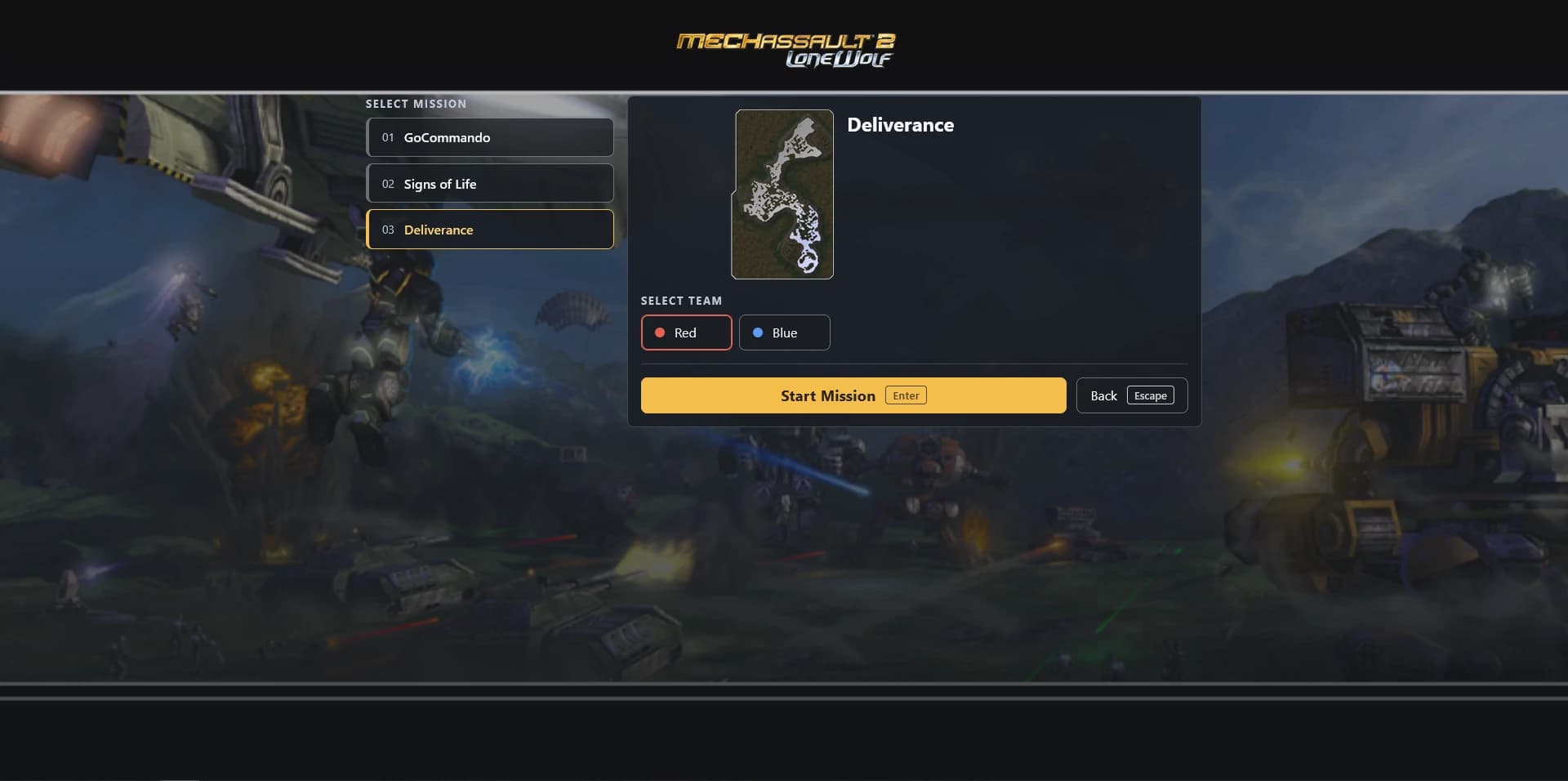
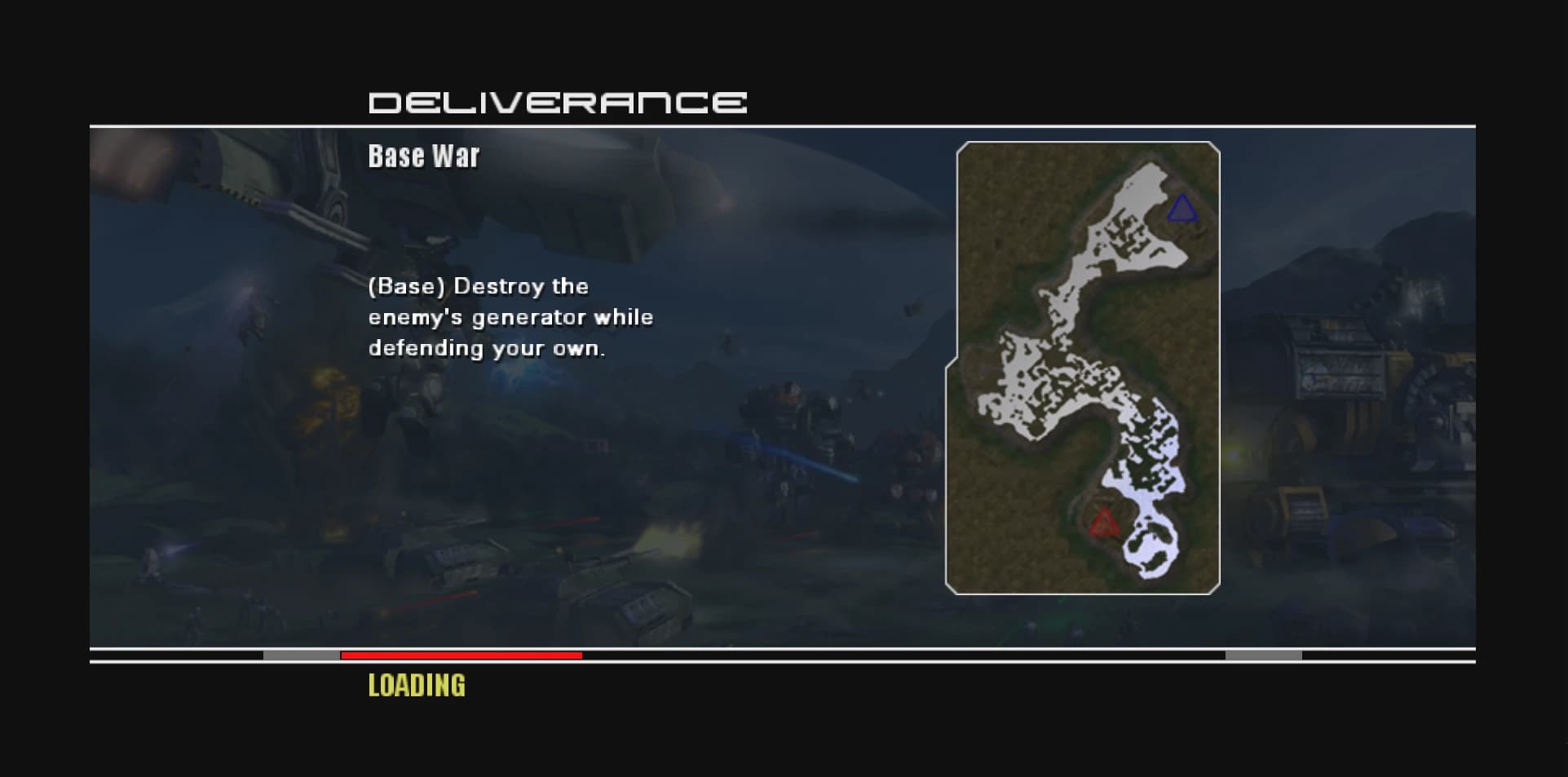
The current focus is making one map, Deliverance, fully playable: a Base War where red and blue AI teams fight to destroy each other's generator, with the player able to fight on foot, in a mech, or in a tank. Destruction, effects, and sound are coming together on that map. The campaign is on hold until Deliverance plays the way it should.
The Blood Asp on Deliverance
The best way to show where it's at is to take one mech out and mess around. These clips are all the Blood Asp, played on Deliverance, with the effects built from the game's own particle definitions.
The roster
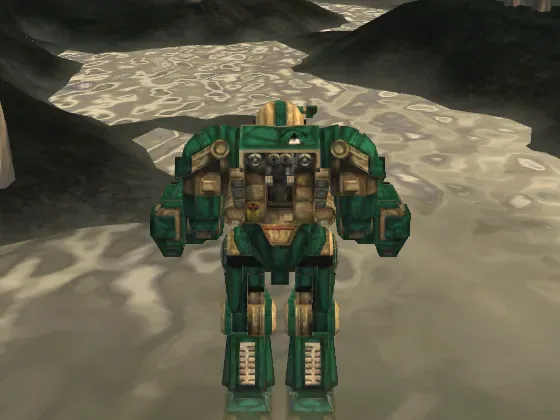
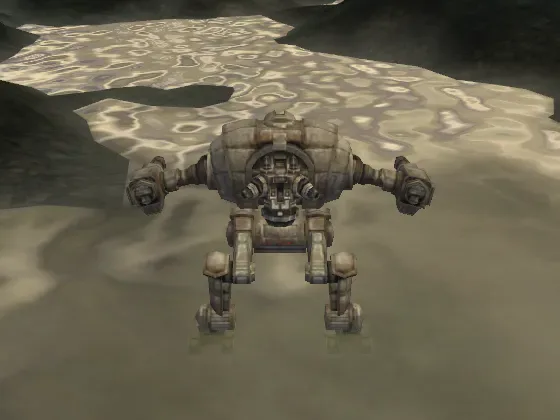
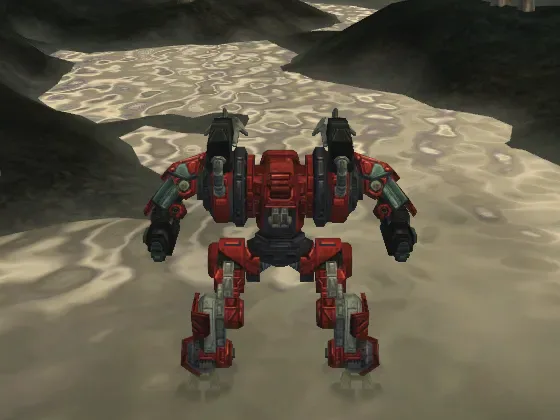
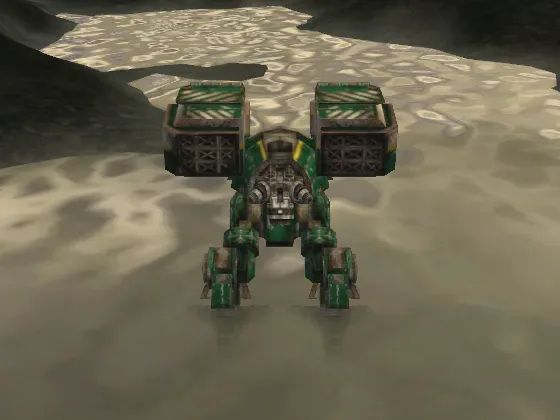
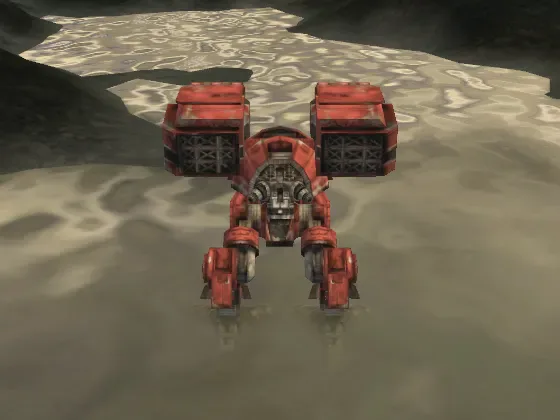
All 30 mechs in the garage are in and pilotable, pulled straight from the disc. Each one was piloted out to the same spot on Deliverance for this lineup:
Atlas
Belial
Blood Asp
Bowman
Catapult
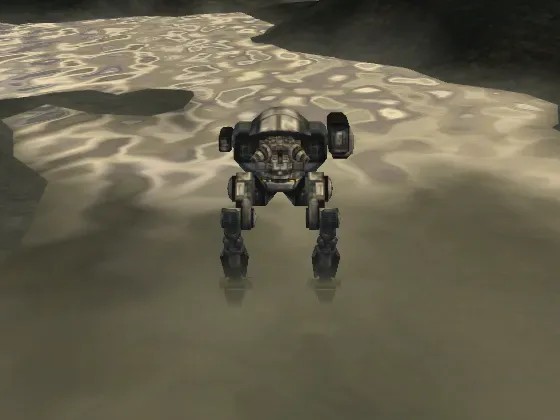
Corvus
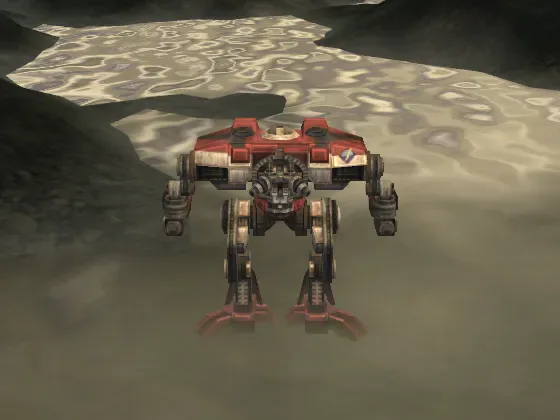
Cougar
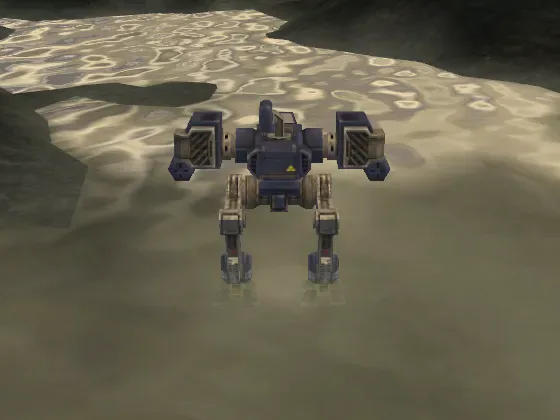
Hackman
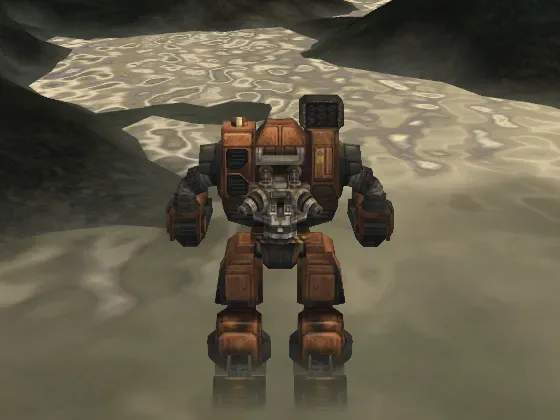
Hellbringer
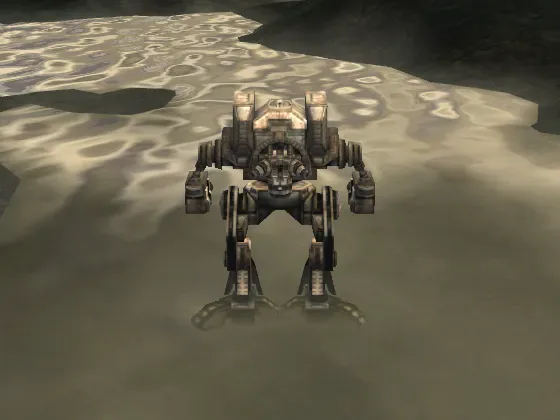
Kit Fox
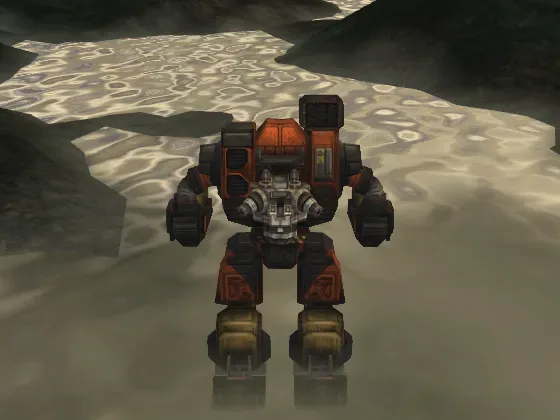
Loki
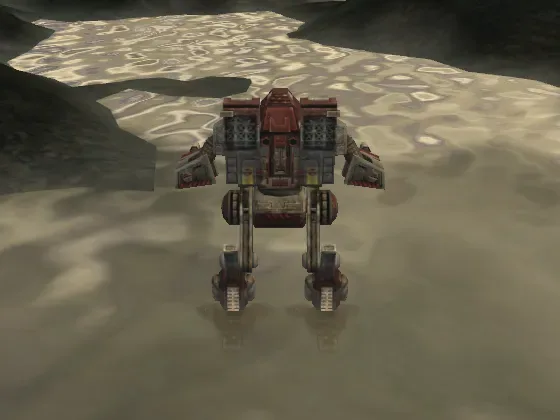
Mad Dog
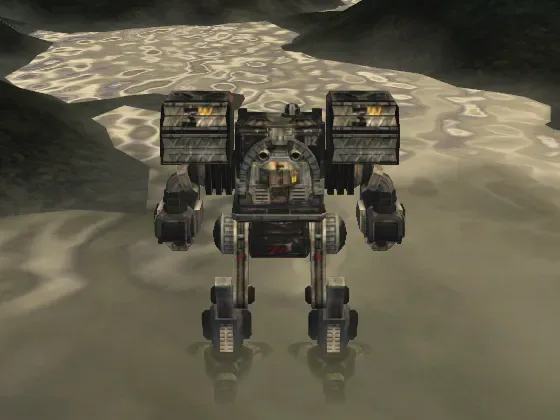
MadCat
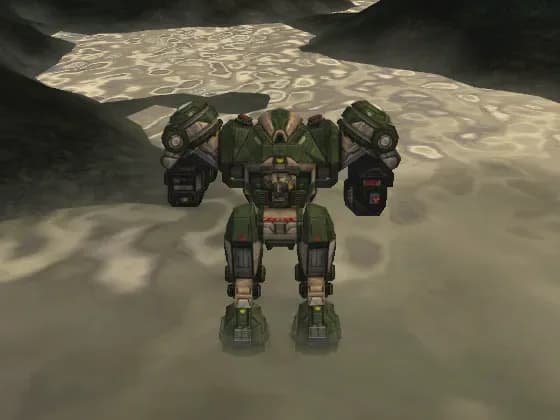
NovaCat
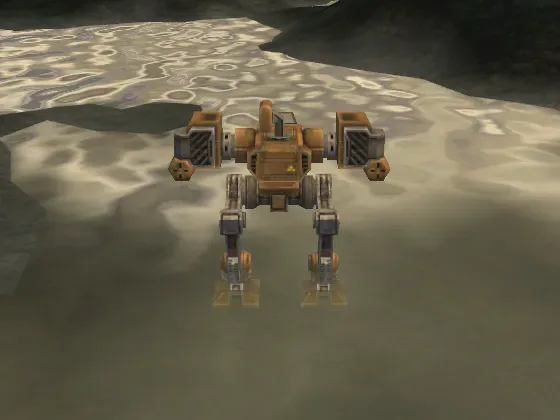
Owens
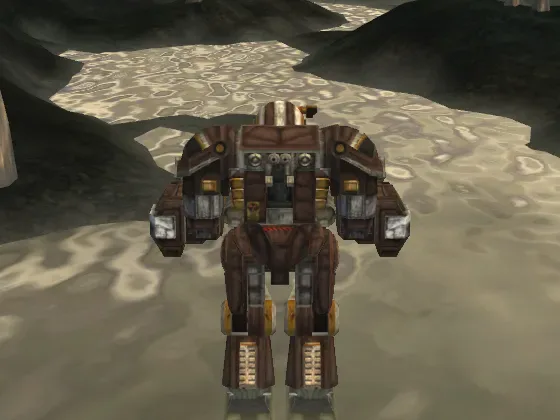
Prometheus
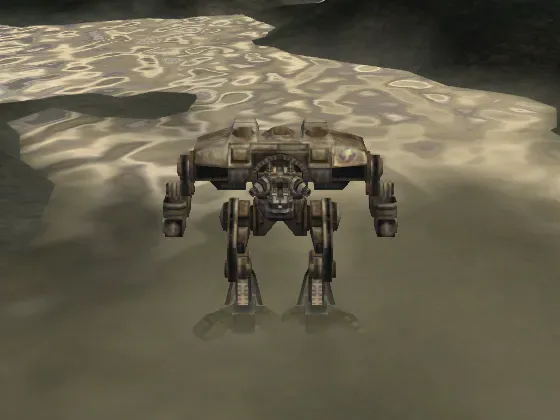
Puma
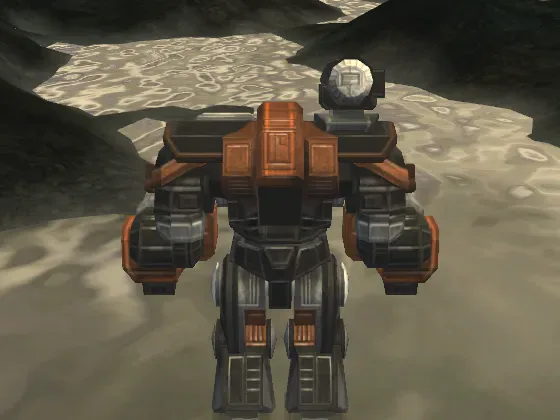
Ragnarok
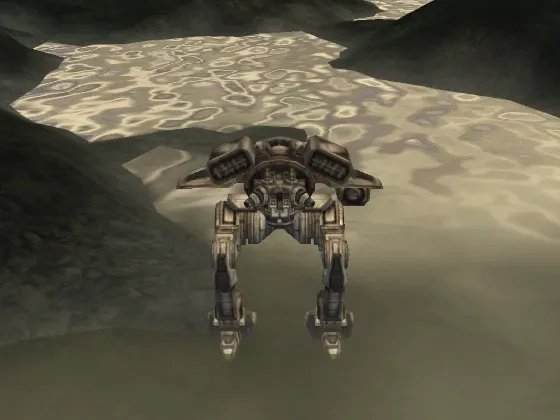
Raptor
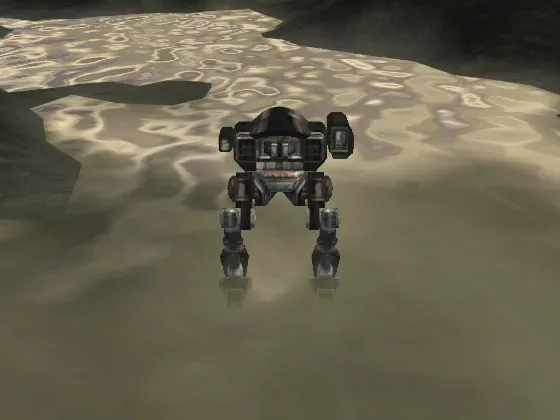
Raven
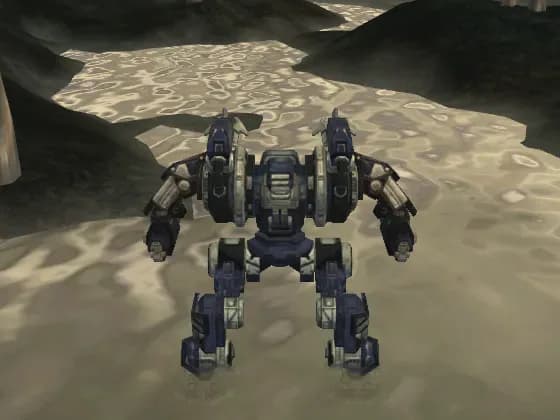
Star Adder
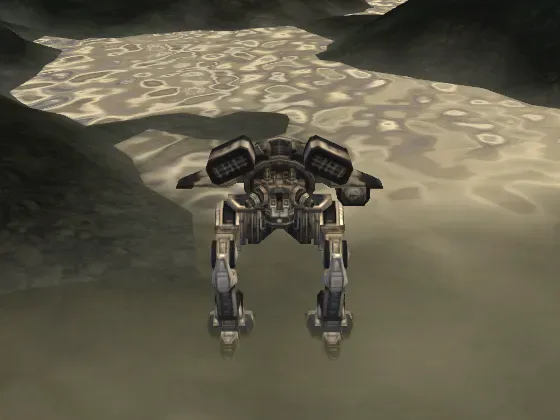
Stiletto
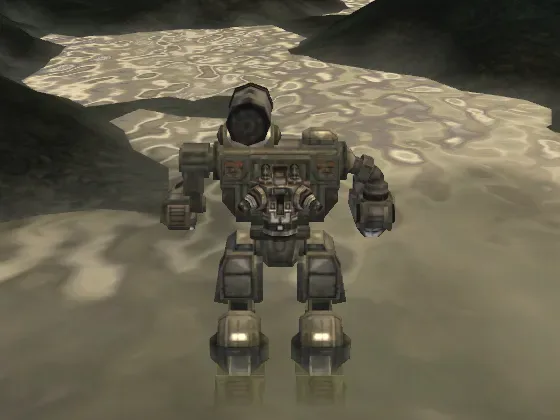
Summoner
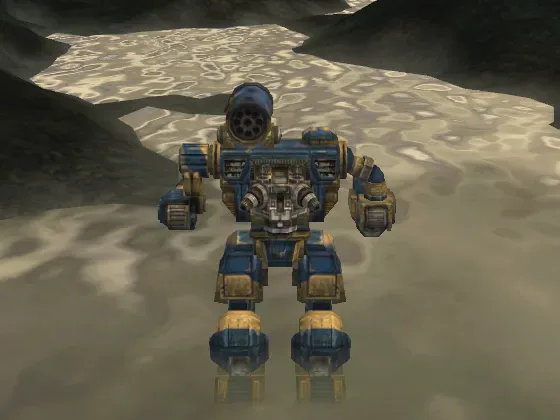
Thor
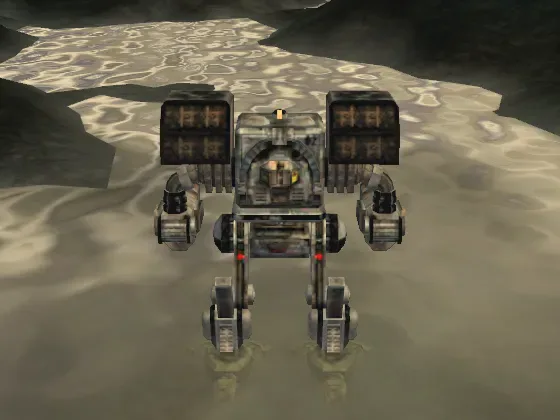
Timber Wolf
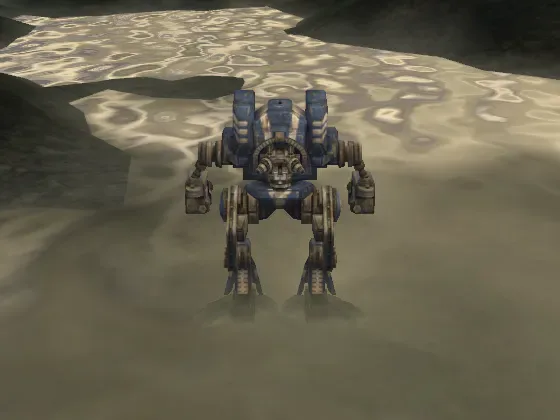
Uller
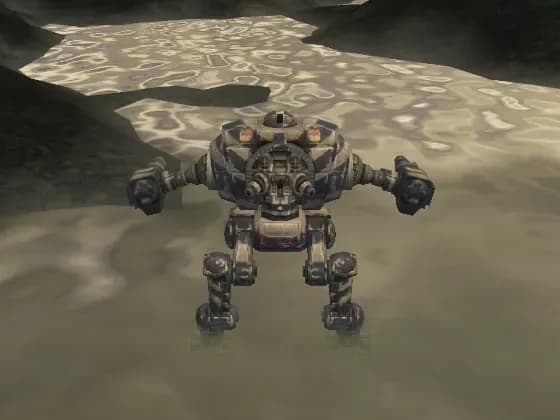
Uziel
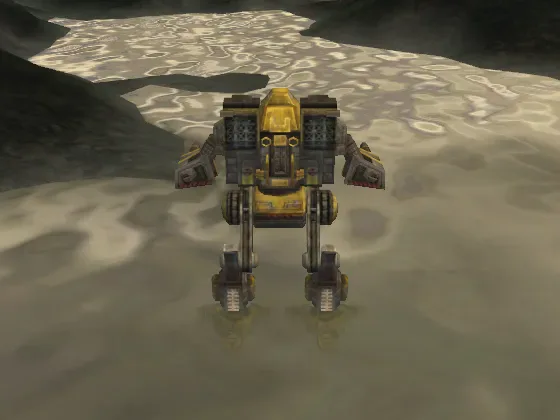
Vulture
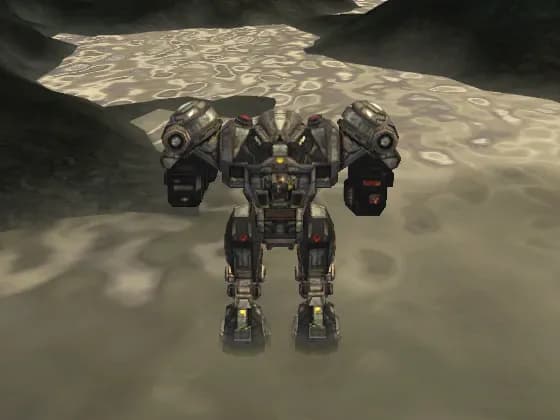
Wendigo
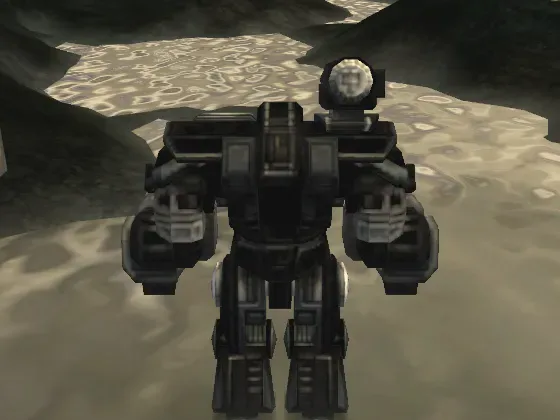
Ymir
The other maps already load from the disc too. These shots are from GoCommando, the first mission:
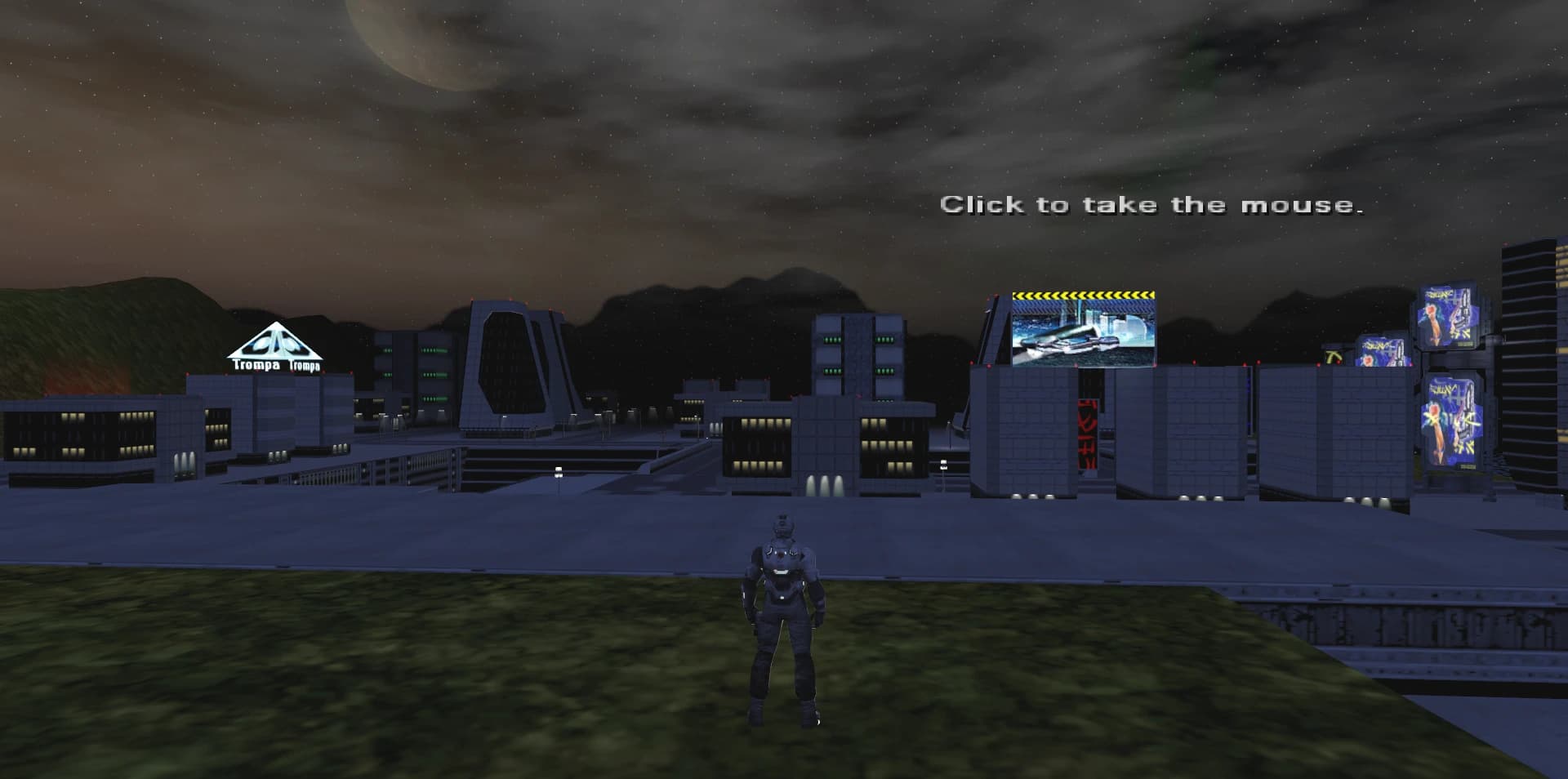
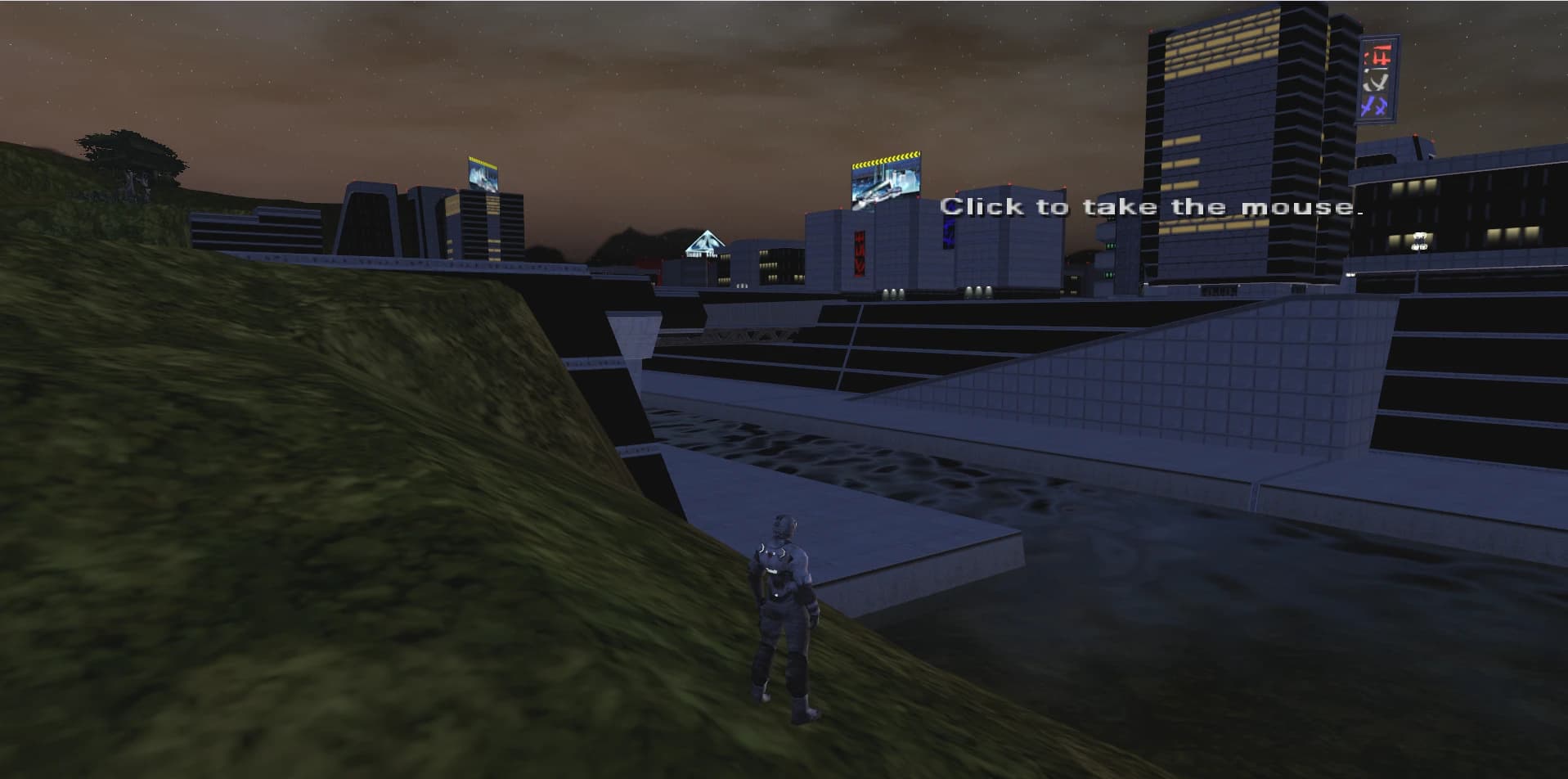
In about four weeks the project has gone through more than 3,000 commits, nearly all of it written by agents. There's no public build: the game's assets come off the disc and stay on my machine, so this is a write-up rather than something you can play.
So far it's going very well. v1 ended up as its own game, built on guesses. v2 is on track to replicate the original.
More to come as it develops.